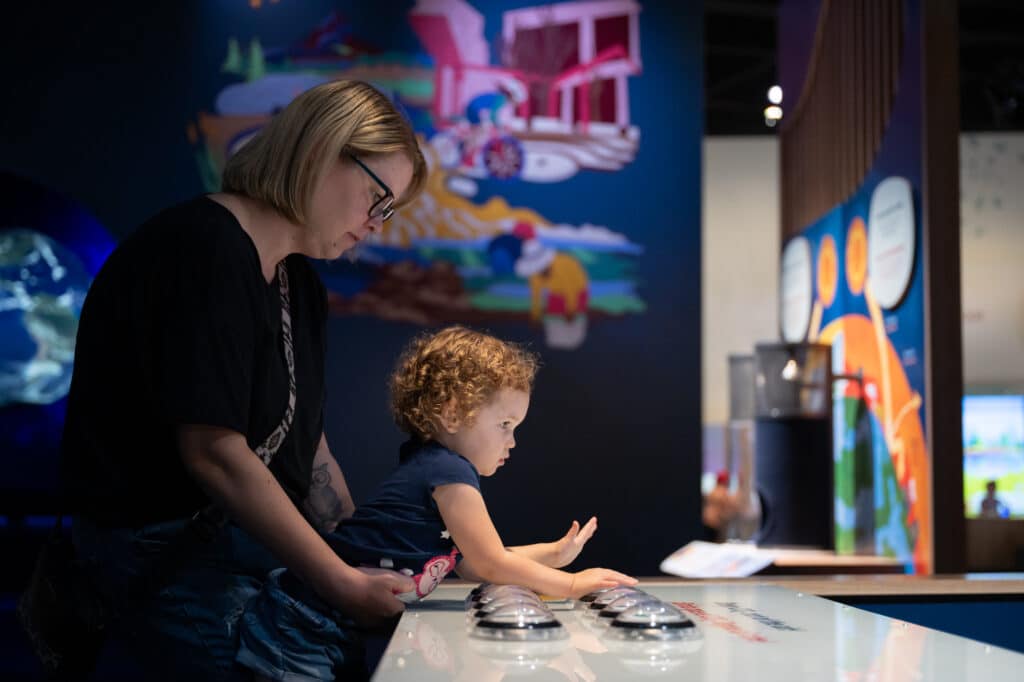
The new Nancy Stueber Natural Sciences Hall
Enter OMSI’s new 7,000-square-foot Nancy Stueber Natural Sciences Hall and the first thing you will notice is that almost nothing is behind glass. That is by design.
“I love anytime a physical movement is reinforcing the learning. If you want people to remember climate science, let them feel it.”
CIERA IVESON
EXLAB CREATIVE DIRECTOR
For many, the scale of climate change can feel overwhelming and out of reach. The new Nancy Stueber Natural Sciences Hall presents a series of experiences that bring big ideas into small hands, cultivating hope, innovation, and action.
Experience, Reflect, Act
Experiences throughout the exhibit hall make complex issues accessible via touch, sound, visuals, and movement. A Heat-Trapping Blanket turns the concept of the greenhouse effect into something you can feel with your own hand.
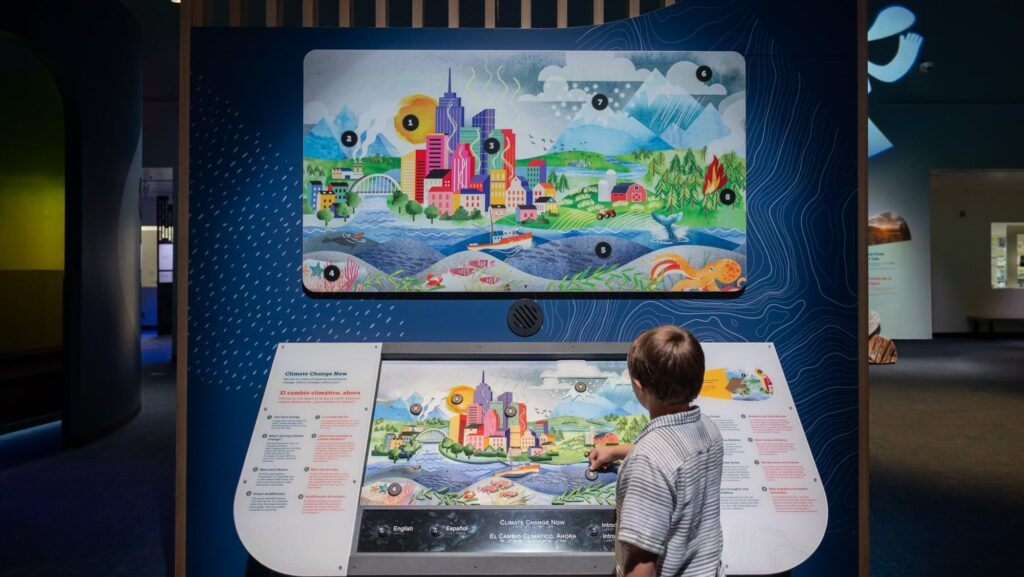
Nearby, a tactile mural by Matthew Rivera translates a scene of farms, mountains, and animals into a touchable relief, embedded with sound and both English and Spanish Braille.
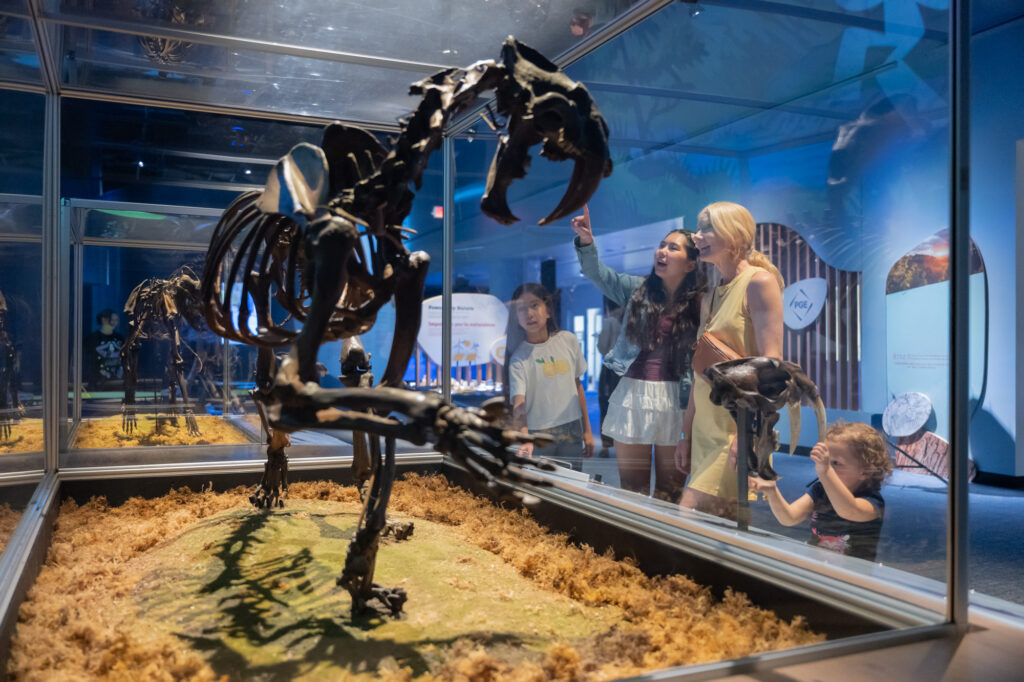
The Paleoclimatology section invites visitors to touch and examine dire wolf and saber-toothed cat skull and jaw replicas, rather than just viewing them through glass. This is a deliberate design choice, even though tactile pieces break from repeated use and need to be replaced more often, as learning is reinforced by physical touch.
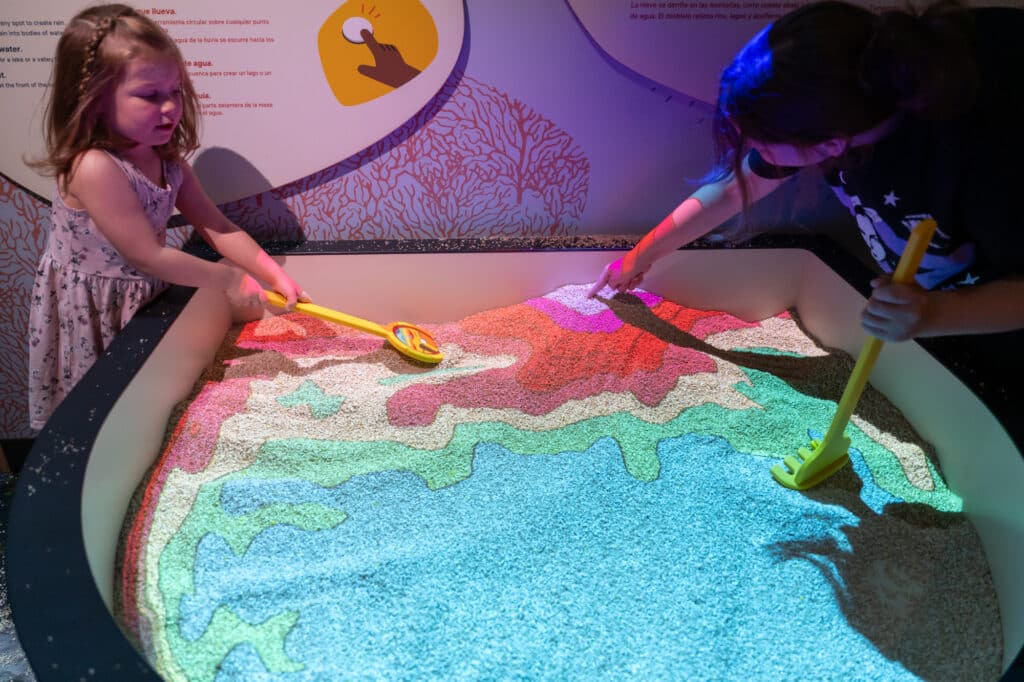
Some of the most striking moments invite full-body engagement rather than a single sensation or button-push. In the Augmented-Reality Sandbox, wands trigger rain that carves rivers down a projected landscape. In a nearby performance nook designed with Sticky Culture and PRAx, dancers flow like water. Unprompted, visitors begin to move along with them.
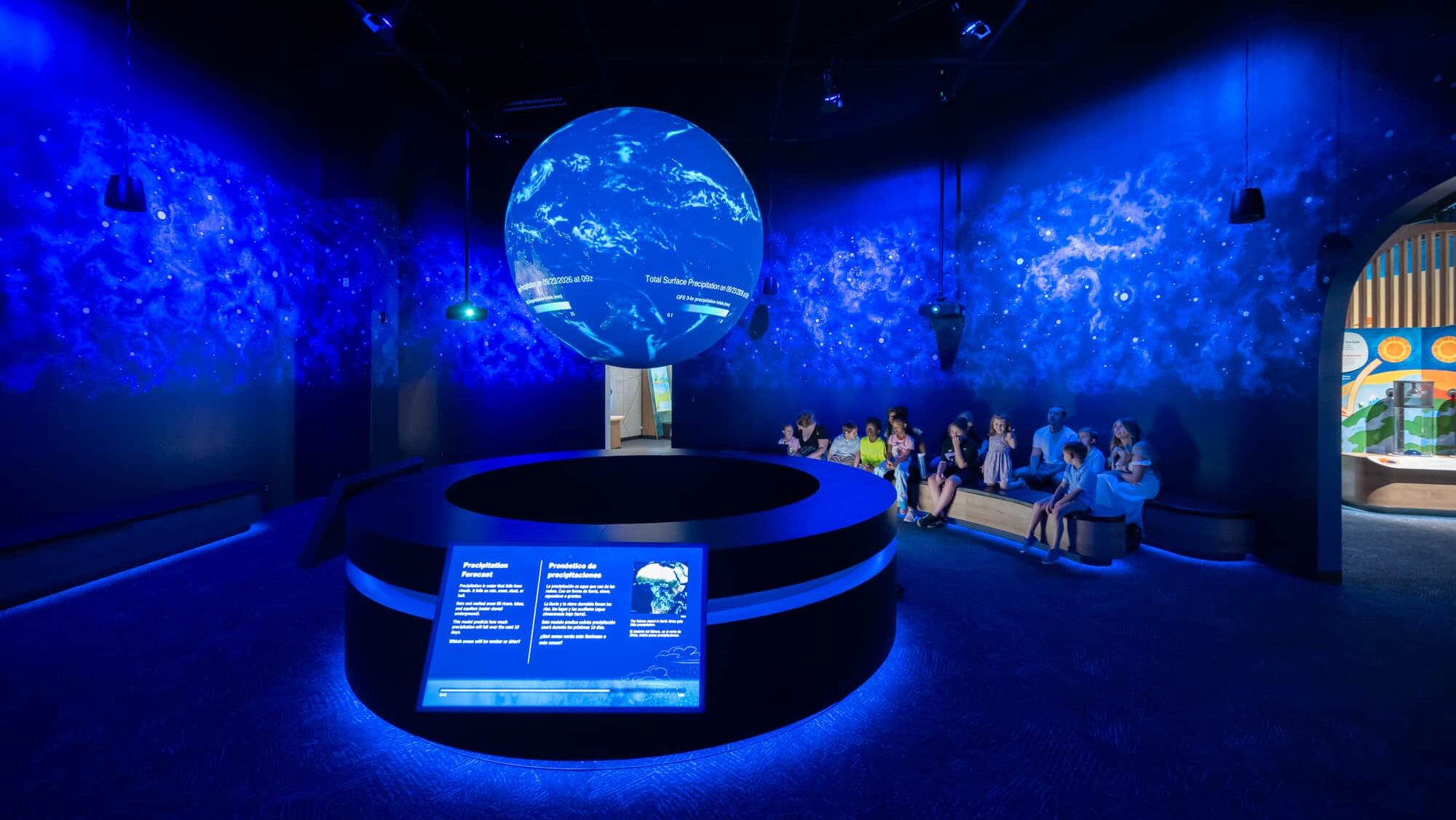
In contrast, other spaces invite stillness. Science on a Sphere (SOS), a state-of-the-art exhibit, features a globe showing real-time data from the National Oceanic & Atmospheric Administration. The mapped data is complemented with scenes of natural Oregon environments, told through an Indigenous lens, connecting larger weather data to local landscapes. The semi-enclosed space that SOS lives in is dark, with a hand-painted mural of stars, encouraging quiet contemplation for visitors.
“It’s the darkness, the way the lights change the space mural, and the wonder of the globe. It’s very special to walk in and understand that the whole place is queuing you to sit down and absorb the earth.”
CIERA IVESON
EXLAB CREATIVE DIRECTOR
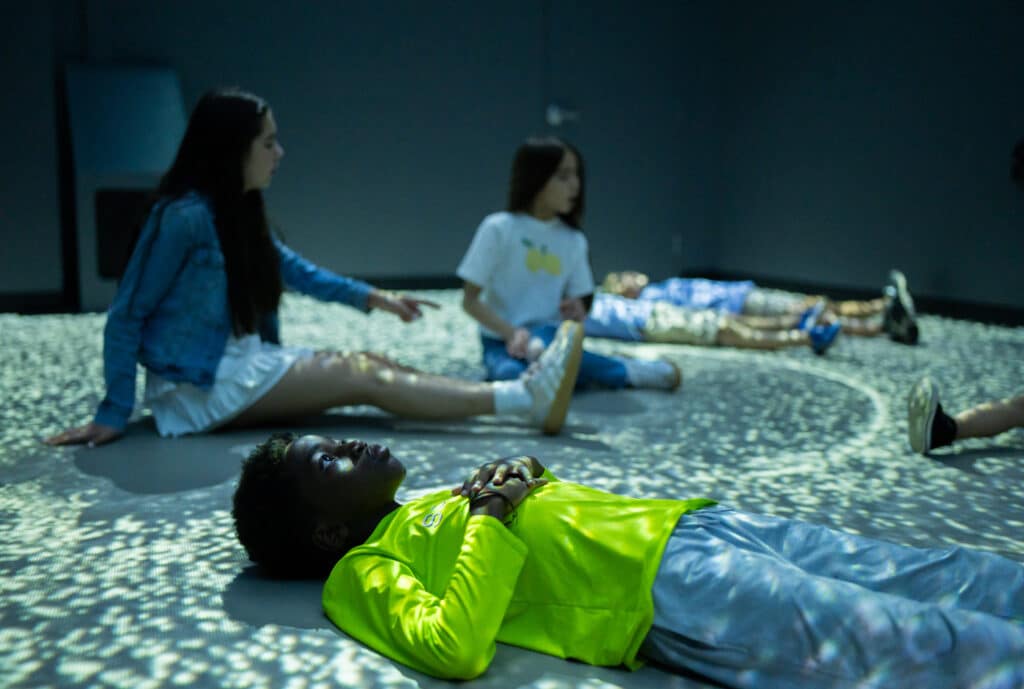
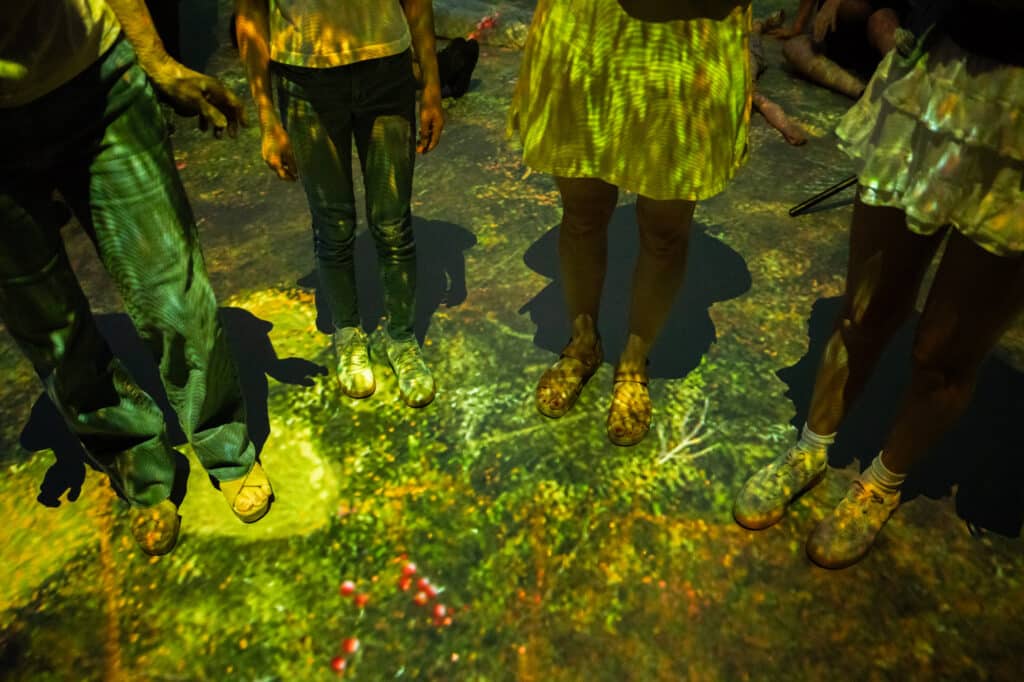
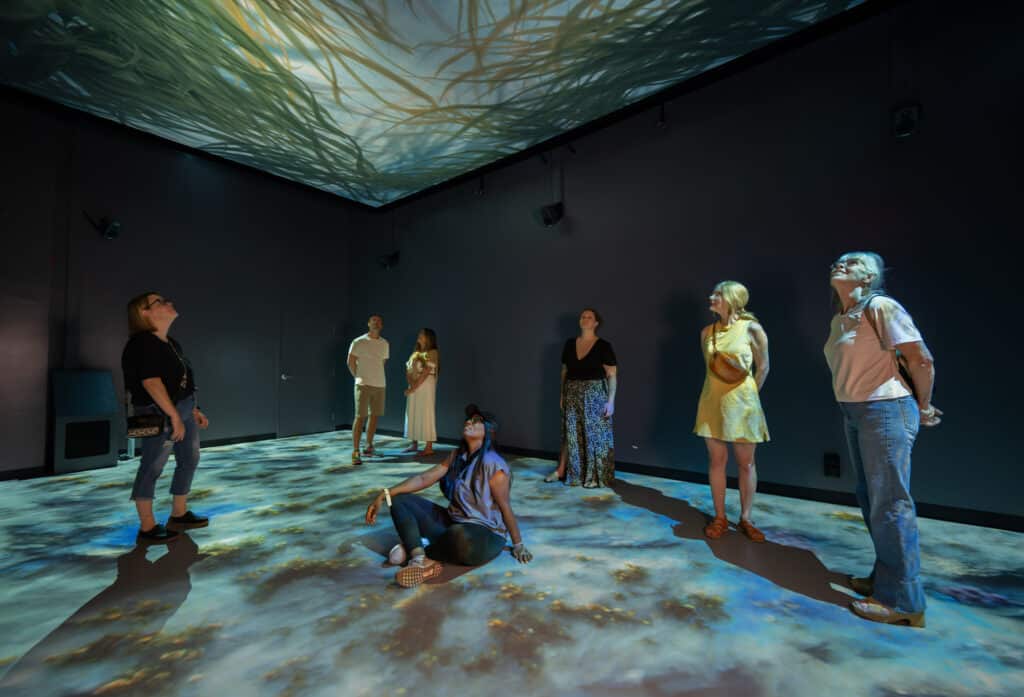
Inviting additional wonder and reflection is the Sit Spot: Reconnecting with the Living World, an immersive installation built in collaboration with the Netherland-based design studio, Tellart. Visitors move through five Pacific Northwest environments where sound and light rewards stillness— traveling from snowy mountain tops to mossy forests to Oregon’s dry High Desert and finishing along Portland’s iconic bridges where if you look closely enough, you will see fish swimming in the Willamette River.
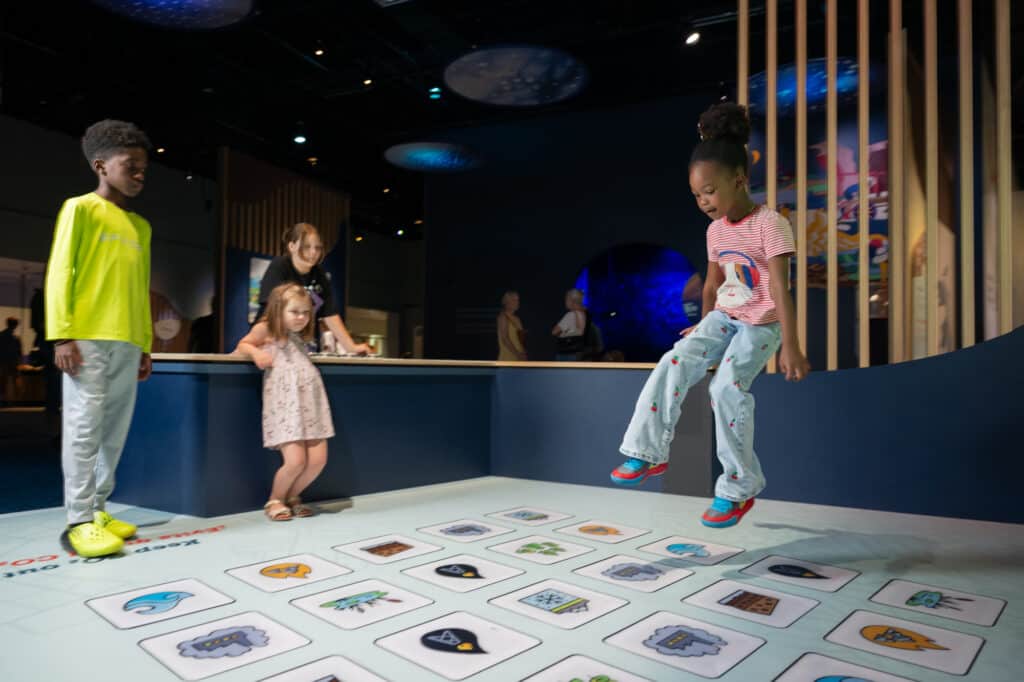
As a contrast to the stillness of these spaces, visitors are invited to move at the Dance Dance Revolution-style Keeping Carbon Stored, a multiplayer, multilingual floor game where they can physically stomp carbon back into the ground. Hand-buttons were also built into the game allowing visitors using wheelchairs, caregivers, and kids who would rather watch from the edges to participate in the action.
Creating a Community of Change
Great ideas are born from community and collaboration. Five years and more than 15 community partners shaped the Nancy Stueber Natural Sciences Hall, and it shines through every exhibit. Visitors don’t just learn about the regional ecosystems and community impacts— they actively participate in the story. As Iveson says, “physicalizing helps with retention.” Guided by that principle, the hall delivers an empowering conclusion: climate action is not an abstract concept for someone or somewhere else. It is local, it is human, and all of us have a role to play.
Explore Ways to Give
Contact our development team at donate@omsi.edu to see how your passion aligns with our upcoming projects.